Michael Jordan's Viral Moment: Why Fans Are Divided on the Daytona Video
The world has witnessed countless iconic moments involving Michael Jordan, from gravity-defying dunks to championship-clinching shots. Yet, in February 2024, the basketball legend found himself at the center of a new kind of viral sensation – one that had nothing to do with basketball and everything to do with a brief, misinterpreted interaction at the Daytona 500. A short `Michael Jordan video` clip, quickly shared across social media, ignited a fierce debate and left fans divided, once again highlighting the double-edged sword of digital virality and instant public judgment.
From Daytona Victory Lane to Online Controversy
The scene was set for celebration. Michael Jordan, co-owner of the burgeoning 23XI Racing team, was rightfully ecstatic. His team's driver, Tyler Reddick, had just clinched a monumental victory at the Daytona 500, a landmark achievement for the team in the NASCAR Cup Series. Jordan, at 63, was visibly overcome with emotion, describing the win as "so gratifying" and feeling "like I won a championship." This raw, unbridled joy was captured on camera, showcasing a side of Jordan often reserved for his basketball triumphs.
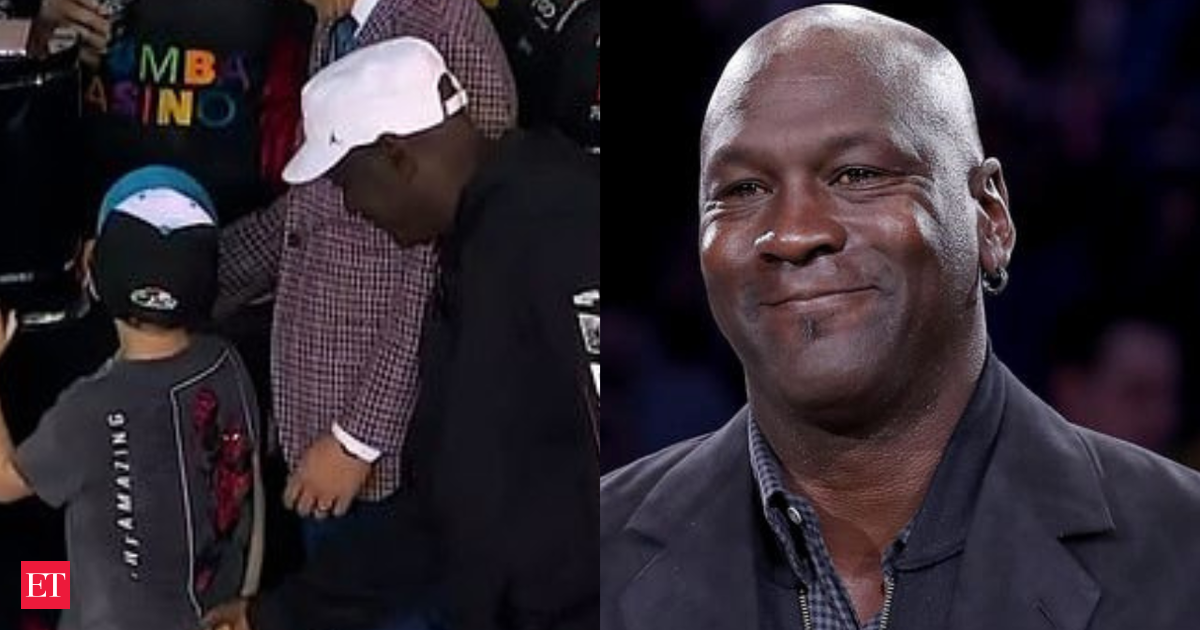
Amidst the jubilant chaos of the post-race celebration, a brief `Michael Jordan video` clip emerged. It showed Jordan appearing to interact with Tyler Reddick’s young son, Beau Reddick, who was standing in front of him. In that fleeting moment, the video seemed to depict Jordan reaching towards the child's lower back or waistband. Without immediate context, the clip rapidly spread, becoming fodder for speculation and immediate, often harsh, condemnation across social media platforms. The speed at which this brief interaction morphed into a full-blown public controversy underscored the precarious nature of celebrity in the digital age.
The Viral Firestorm: Initial Reactions and Rushing to Judgment
The initial `Michael Jordan video` left little to the imagination for many viewers. Stripped of any surrounding context, the isolated clip appeared jarring and raised immediate red flags for a significant portion of the online audience. The swift reactions were predominantly negative, with users expressing shock, disappointment, and even anger. Comments flooded platforms like X (formerly Twitter), questioning Jordan's actions and lamenting the potential stain on his otherwise pristine public image.
For decades, Jordan has embodied a near-mythical status, a paragon of athletic excellence and a global icon whose legacy seemed unshakeable. This viral clip, however, threatened to unravel years of carefully constructed public perception in mere seconds. Many long-time fans expressed a profound sense of disillusionment, struggling to reconcile the `Michael Jordan video` with the figure they had admired for so long. The immediate rush to judgment illustrated a common pitfall of online discourse: the tendency to form strong opinions based on limited, decontextualized information. As one user aptly put it, the video presented "a real problem" for Jordan's "coolest legacy ever."
Unraveling the Mystery: New Footage and Crucial Context
Fortunately for Jordan and his legion of fans, the narrative began to shift as new information and more comprehensive footage came to light. The initial, short `Michael Jordan video` was eventually superseded by longer, wider shots that provided critical context, revealing a starkly different interpretation of events.
These expanded videos showed Beau Reddick, the young son of the winning driver, drenched from the celebratory post-race dousing of water, ice, and confetti. It became clear that Jordan's action was not one of inappropriate contact, but rather an attempt to help the child. Analysts and fans who reviewed the new footage pointed out that chunks of ice and water were packed down the boy’s back and shirt, a common consequence of victory lane celebrations.
Figures like NASCAR insider Bubba, initially admitting the video "looks shocking" at first glance, urged viewers to "do your due diligence before jumping the gun." He articulated what many others eventually saw: "If you actually watch it closely, you can see chunks of ice packed in the kid’s back. First glance looks bad. Second glance looks like someone helping a kid who had ice shoved down his shirt." This crucial re-evaluation transformed the perception of the `Michael Jordan video` from a scandalous moment into an act of kindness and paternal concern. For a deeper dive into this turning point, read
Michael Jordan Viral NASCAR Video: The Truth About the Ice.
The Defense Rises: Analysts, Fans, and the Call for Due Diligence
As the new footage circulated, a wave of support for Michael Jordan quickly followed. Scores of analysts, journalists, and fans stepped forward to defend the NBA legend, admonishing those who had been quick to condemn him. The sentiment was clear: in the age of viral content, it’s imperative to seek out the full picture before casting judgment.
Many critics of the initial backlash highlighted a worrying trend in digital culture: the propensity to "sexualize everything" or to jump to the most negative conclusion. "People have to try and sexualize everything," one commenter wrote. "Stop trying to pretend that Michael Jordan sexually assaulted a kid on national TV. It says MORE about you than him." This perspective emphasized that the interpretation of the `Michael Jordan video` revealed more about the biases and readiness to criticize in the online sphere than it did about Jordan's actual intent.
This period served as a valuable reminder about media literacy and critical thinking. In a world where clips can be instantly isolated and disseminated without context, the responsibility falls on consumers of content to question, verify, and consider alternative explanations before contributing to a potentially damaging narrative.
Lingering Doubts: Why Some Remain Skeptical
Despite the overwhelming evidence and explanations suggesting Jordan's benevolent intent, it's crucial to acknowledge that not everyone was swayed by the new footage. A segment of the online community remained skeptical, either unwilling or unable to fully accept the "ice theory." For some, the initial shock of the `Michael Jordan video` was too profound to be easily erased, and the images of his actions lingered as problematic.
These dissenting voices often argued that even if the intent was to remove ice, the *manner* of the interaction still appeared questionable or awkward to them. For these individuals, the rapid defense of Jordan felt like an attempt to salvage a beloved icon's reputation rather than an objective analysis of the footage. One fan, expressing profound disappointment, wrote on X, "That MJ video is a real problem man... 40 yrs of arguably the coolest legacy ever, all out the window in 10 seconds. It’s inconceivable for someone from my era for MJ to look like this." This sentiment highlights how deeply ingrained perceptions of public figures can be, and how challenging it is to alter them once a negative narrative takes hold, regardless of subsequent clarifications. The incident, for some, became a jarring reminder of how easily even the most revered figures can fall under intense scrutiny in the hyper-connected world. You can read more about the impact on his legacy in
MJ's Daytona 500 Joy & Viral Video Twist: Was His Legacy Safe?.
The Broader Implications: Navigating Digital Virality and Public Perception
The `Michael Jordan video` incident serves as a powerful case study in the complexities of modern digital media and public perception. It’s a stark reminder that in the age of instant sharing, context is often the first casualty. Here are some key takeaways:
* **The Power of First Impressions:** Initial reactions, however ill-informed, can rapidly form a dominant narrative that is incredibly difficult to overturn.
* **The Echo Chamber Effect:** Viral content often thrives within echo chambers, where confirmation bias reinforces initial interpretations, making it harder for corrective information to penetrate.
* **Due Diligence is Crucial:** For both content creators and consumers, a commitment to seeking out comprehensive information and considering multiple perspectives is more vital than ever.
* **Celebrity Scrutiny:** Public figures, regardless of their past achievements or stature, are under constant, unforgiving scrutiny, where a single misstep or misinterpretation can ignite a firestorm.
* **The Fragility of Legacy:** Even the most iconic legacies can be tested by fleeting, decontextualized moments captured and amplified online.
This incident offers a valuable lesson in media literacy for everyone. Before sharing or reacting to a sensational `Michael Jordan video` or any other viral clip, it's prudent to pause, question the source, and actively seek out additional context.
Conclusion
The `Michael Jordan video` from the Daytona 500 celebration quickly became a microcosm of the challenges inherent in our hyper-connected world. What started as a moment of pure joy for Jordan and his team rapidly devolved into a polarizing controversy, fueled by a decontextualized clip and swift online judgment. While subsequent footage and explanations largely clarified Jordan's benevolent intentions, the initial firestorm and lingering doubts among some underscore the power of first impressions and the persistent struggle to reconcile reality with perceived truth in the digital age. Ultimately, this viral moment serves as a poignant reminder for both public figures and the public alike: in the court of social media opinion, context is king, and due diligence is paramount.