The Michael Jordan Viral NASCAR Video: Unpacking the Truth About the Ice
In the whirlwind world of viral content, a fleeting moment can spark a firestorm of speculation, shaping public perception with astonishing speed. Such was the case recently when basketball icon Michael Jordan found himself at the center of a social media frenzy. A video, capturing a celebratory moment at the Daytona 500, rapidly spread across the internet, leading to widespread misinterpretations and heated debate. The initial reaction suggested inappropriate contact, threatening to overshadow a triumphant occasion for Jordan and his racing team. However, as with many internet sensations, a deeper look reveals a crucial piece of context: the truth about the ice.
This article dives into the full story behind the Michael Jordan video, from the exhilarating victory that set the scene to the subsequent clarity that emerged, proving once again that a few seconds of footage can be profoundly misleading without the full picture. It serves as a stark reminder of the challenges public figures face in the digital age and the critical importance of seeking context before judgment.
A Historic Daytona 500 Triumph for MJ's 23XI Racing
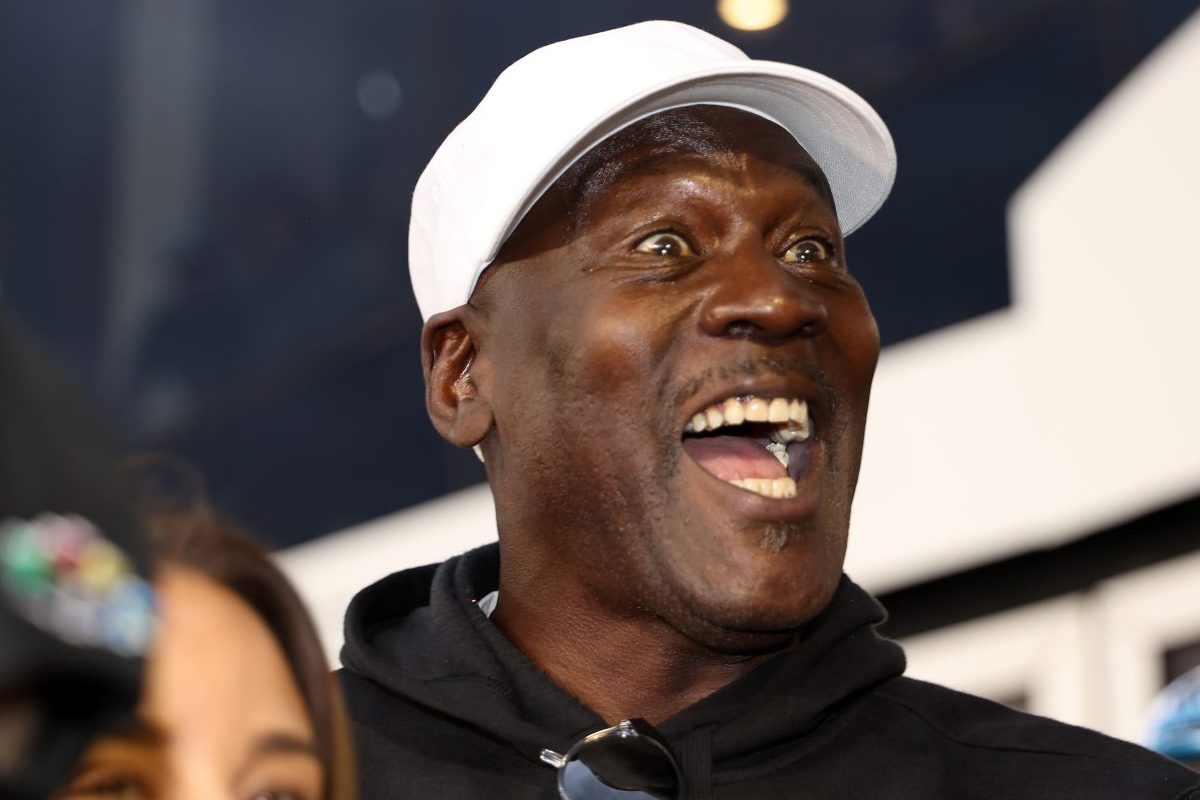
The scene that unfolded on Sunday, February 15th, at the NASCAR Cup Series Daytona 500 was one of pure elation for Michael Jordan. As co-owner of 23XI Racing, he watched his driver, Tyler Reddick, clinch a landmark victory. The win was not just another trophy; it represented a significant milestone for Jordan's venture into NASCAR, a sport he clearly holds with immense passion. At 63 years old, the former NBA superstar's reaction was palpable, mirroring the intensity and joy he once displayed on the basketball court.
"I can't even believe it. It was so gratifying. ... I'm ecstatic. I don't even know what to say. It feels like I won a championship, but until I get my ring, I won't even know," Jordan reportedly shared, his words conveying the profound emotional investment he has in his team's success. This was not a detached owner observing from afar; this was a competitor reveling in a hard-fought victory. The post-race celebration was, as expected, chaotic and jubilant, involving the winning team, ecstatic crew members, and Reddick's young son, Beau Reddick, who was right there in the thick of it. It was during this very celebratory explosion of confetti, cheers, and refreshment that the now-infamous Michael Jordan video was captured, setting the stage for an unforeseen controversy.
The Viral Clip and the Swift Tide of Misinformation
Almost immediately after the celebration, a short clip began circulating online. The footage, often zoomed in and isolated from its broader context, showed Michael Jordan appearing to interact with Beau Reddick. From certain angles and without full understanding of the chaotic environment, the video unfortunately seemed to depict Jordan making an inappropriate gesture towards the child's waistband. Social media, with its instantaneous sharing capabilities and tendency towards sensationalism, latched onto this initial interpretation with alarming speed.
The outrage was swift and vocal. Many users, reacting to the decontextualized clip, condemned Jordan, expressing shock and disappointment. The speed at which this negative narrative took hold underscored the power of a viral moment to shape public opinion, even in the absence of complete information. For someone whose legacy is built on unparalleled achievement and a meticulously guarded public image, the accusations were particularly jarring. The internet had once again proven its capacity to create a storm from a single raindrop, with countless individuals rushing to judgment based on what was, at first glance, a deeply concerning visual. This rapid spread of initial, often incorrect, conclusions highlights why Michael Jordan's viral moment: why fans are divided on the Daytona video became such a hot topic.
Unraveling the Mystery: The Truth Behind the Ice
Fortunately, as often happens in the age of omnipresent cameras and citizen journalism, additional footage and eyewitness accounts soon emerged to provide crucial context, dramatically altering the narrative surrounding the Michael Jordan video. The prevailing theory of inappropriate contact began to unravel as new perspectives clarified the situation.
The key revelation was simple yet profound: Tyler Reddick's young son, Beau, was quite literally drenched in ice and water from the exuberant post-race celebration. Victory lane celebrations in NASCAR are known for being boisterous, often involving sprays of water, champagne, and celebratory ice showers. The new footage clearly showed the child covered in frozen debris and liquid. What initially appeared as an untoward gesture was, in fact, Michael Jordan's attempt to help the child.
Analysts and fans who reviewed the more comprehensive footage quickly came to Jordan's defense. "The kid was drenched during the celebration with water and ice along with the confetti. Zoomed in you can see Jordan is clearly tugging on the shirt," one observer noted. Radio host Bubba, admitting his own initial shock, urged viewers to "do their due diligence before jumping the gun." He elaborated, "Michael Jordan reaching into Tyler Reddick’s son’s waistband went viral fast. But if you actually watch it closely, you can see chunks of ice packed in the kid’s back. First glance looks bad. Second glance looks like someone helping a kid who had ice shoved down his shirt." This explanation resonated with many, transforming a moment of perceived malice into one of parental concern and kindness. It highlighted Jordan's natural instinct to assist a child who was undoubtedly uncomfortable, cold, and possibly even in slight pain from the ice.
The Speed of Misinformation: A Digital Age Challenge
The rapid evolution of the narrative surrounding the Michael Jordan video offers a potent case study in the dynamics of online information sharing. In an era where news travels at the speed of light, visual snippets can be easily misinterpreted, and initial impressions often dictate widespread belief. This incident illustrates several critical points about modern media consumption:
- The Power of the First Impression: A brief, ambiguous clip can quickly shape perception, especially when viewed without the full context. Our brains are wired to fill in gaps, sometimes erroneously.
- Confirmation Bias: Once an initial interpretation takes hold, people may seek out and interpret further information in a way that confirms their existing belief, making it harder for corrective information to penetrate.
- The Role of Sensationalism: Controversial or shocking content tends to go viral faster, regardless of its accuracy. This incentivizes quick judgments over thorough investigation.
- The Responsibility of the Viewer: The incident underscores the importance of critical thinking and media literacy. Before sharing or reacting strongly to viral content, especially that which seems deeply negative, it's crucial to seek out multiple sources, wider angles, and expert analysis. Had everyone paused to consider the environment – a chaotic, wet, icy celebration – the initial misinterpretation might have been avoided by more people.
As one defender eloquently put it, "People have to try and sexualize everything. The kid is wet and probably has ice down his shirt after the celebration. Stop trying to pretend that Michael Jordan sexually assaulted a kid on national TV. It says MORE about you than him." This highlights a disturbing trend where certain segments of online discourse are quick to assign the most nefarious possible intentions, often driven by a desire for outrage or a cynical view of public figures.
Safeguarding Legacies in the Viral Era
The Michael Jordan video controversy served as a stark reminder of how fragile reputations can be in the age of instant virality. A lifetime of achievements, a meticulously built public persona, and a legacy as one of the greatest athletes of all time can seemingly be jeopardized by a single, decontextualized 10-second clip. For many, particularly those who grew up idolizing Jordan, the initial accusations were profoundly unsettling. "That MJ video is a real problem man," one fan wrote, expressing concern that "40 yrs of arguably the coolest legacy ever, all out the window in 10 seconds."
While the truth ultimately emerged, dispelling the most damaging claims, the incident highlighted the difficulty of fully erasing an initial negative impression, even with clear evidence to the contrary. Some users, unwilling to recant their initial judgments, continued to push back against the "ice" theory, demonstrating the entrenched nature of deeply held beliefs once formed. This underscores the need for proactive engagement and rapid dissemination of factual context when public figures are caught in such situations.
For individuals navigating the public eye, this episode is a powerful lesson: every action, no matter how innocuous, can be filmed, scrutinized, and misinterpreted. For the public, it's an equally important lesson in exercising discernment and responsibility. In an age saturated with content, the most valuable tool we possess is critical thinking – the ability to pause, question, and seek the full story before drawing conclusions or contributing to a potentially damaging narrative.
Conclusion
The viral Michael Jordan video from the Daytona 500 celebration is more than just a fleeting internet sensation; it's a profound commentary on the challenges of perception in the digital age. What started as an emotional high for Michael Jordan and 23XI Racing quickly veered into controversy due to a widely misinterpreted moment. The truth, eventually revealed through additional footage, painted a picture not of inappropriate conduct, but of a caring individual simply trying to help a child remove uncomfortable ice from his clothing during a boisterous celebration.
This incident serves as a crucial reminder for all of us: context is king. In an online world brimming with decontextualized clips and rapid-fire judgments, the responsibility falls on each viewer to practice due diligence and resist the urge to jump to conclusions. Michael Jordan's legacy, built on decades of excellence, ultimately weathered this viral storm thanks to the clarity provided by new evidence. However, it underscores the fragility of reputation and the enduring importance of truth in an era where misinformation can spread faster than fact.